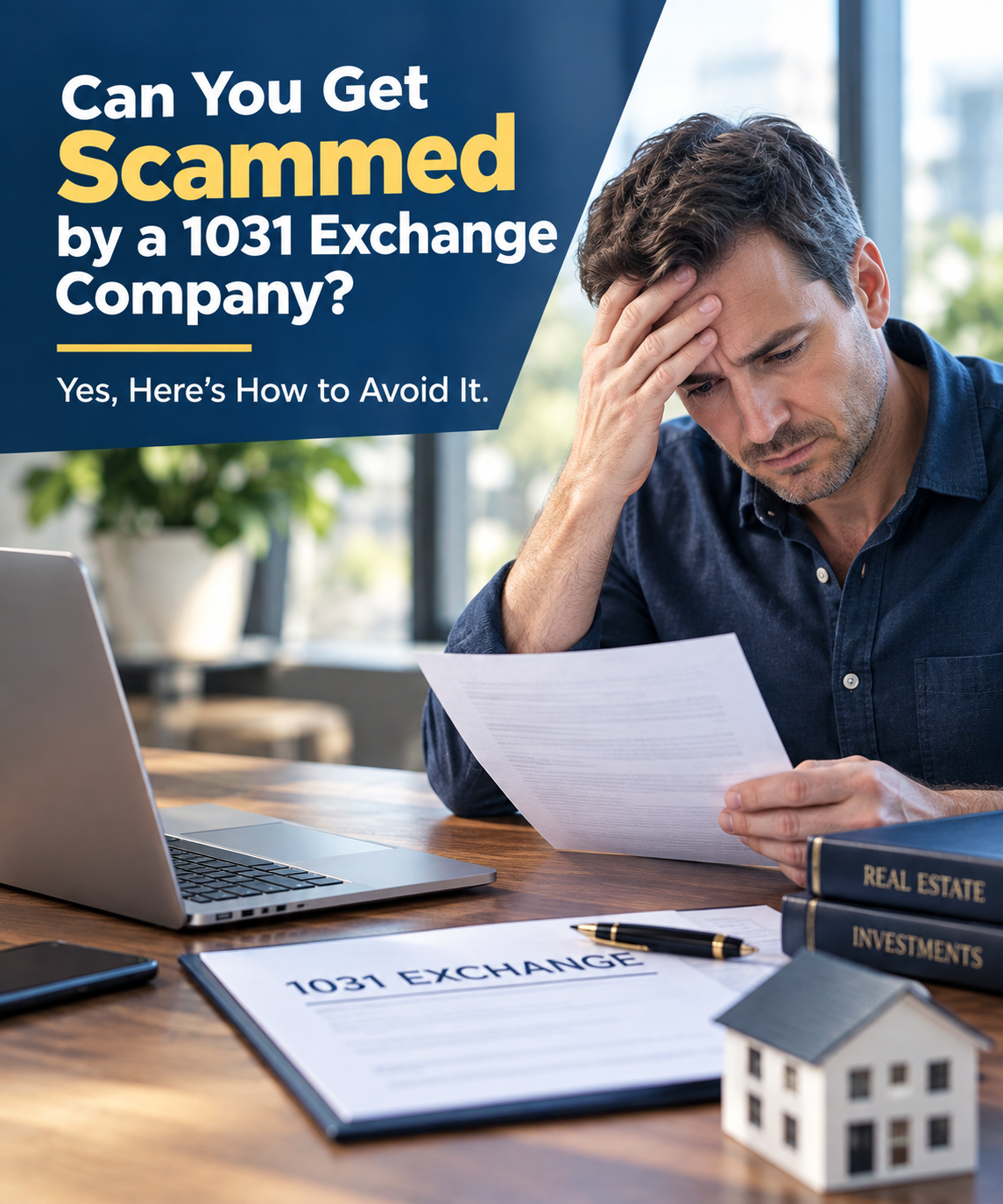
Real estate investors are trained to watch for problems with contractors, property managers, and bad deals. But there’s another risk that gets far less attention: the 1031 exchange intermediary itself.
It happens. One investor hired a 1031 intermediary who simply took the money and disappeared. So yes, you can get scammed by a 1031 exchange company. The good news is that this kind of loss is entirely avoidable if you know what to look for before you hire one. If you’re still getting familiar with the basics of how an exchange works, our guide to the 12 questions investors need to ask about 1031 exchanges is a good place to start.
Rule One: It Can’t Be Your Title Company
Before you even think about vetting a specific company, understand the basic requirement: your 1031 intermediary cannot be the title company handling your closing. It must be a genuinely independent third party. This isn’t optional, it’s a structural requirement of how the exchange works.
The Right Way to Verify Legitimacy
The single best way to find a trustworthy intermediary is a referral, but not just any referral. There’s a real difference between:
- A verified recommendation: another investor or broker who has actually completed a transaction with that company and can vouch for the experience firsthand.
- A weak lead: hearing a company’s name secondhand, or meeting someone at a networking event who claims to work there.
Only the first one counts as real due diligence. If someone tells you they worked with a company, they were legitimate, and they delivered, that’s the kind of confirmation worth acting on. A vague “I’ve heard of them” is not verification, and treating it as such is exactly how investors end up exposed. The same standard of due diligence applies to how you structure the entities that will hold your properties, a common source of costly mistakes we cover in our guide to real estate entity structuring.
Watch: Can You Get Scammed by a 1031 Exchange Company? Yes, Here’s How to Avoid It
Understand the Fee Structure Before You Sign
Beyond legitimacy, the other place investors get caught off guard is fees. Most 1031 exchange companies charge on a per property basis, and the structure can look very different depending on your deal:
- Buying a single 30 unit apartment building? You’re likely looking at one flat fee.
- Buying 10 single family homes? That could mean 10 separate fees, one per property.
Before you commit to an intermediary, make sure you fully understand how their fee structure works and that it actually fits the shape of your transaction. A fee structure that’s reasonable for a single large purchase could get expensive fast on a portfolio deal.
The Bottom Line
Protecting yourself from a 1031 exchange scam comes down to two things: verifying that the company is legitimate through a real, confirmed referral, and verifying that their fees are fair and clearly understood before you hand over control of your funds. Do both, and you’ll be positioned to execute your exchange the way it’s meant to work, securing your deal and keeping the tax savings you set out to get, without the risk of losing it all to a bad actor.
If any part of this sounds like where you are right now, whether you’re vetting a 1031 intermediary, reviewing a confusing fee structure, or just want a second opinion before you sign anything, reach out to our team. We’re happy to help based on whatever stage of the process you’re in.