Recently I opened my electric bill, and only avoided a resulting heart attack because I’m a fairly healthy individual.
These days, every time you pick up your utility bill, it seems like the price is going up. Utility providers everywhere are requesting and receiving rate hikes in order to not only provide the same services, but repair and upgrade their infrastructure.
Installing energy-efficient building components is no longer just a nice thing to do for the planet — it’s becoming a necessity to save your wallet, alongside other utility cost-saving strategies owners already rely on.
Did you know there’s a program called C-PACE, available to commercial and multifamily property owners, to help finance the cost of energy-saving retrofits?
What Is C-PACE?
Commercial Property Assessed Clean Energy (C-PACE) is a financing tool that allows commercial (including 5+ unit multifamily) property owners to finance the upfront cost of energy conservation measures through a voluntary assessment on the property tax bill.
Energy conservation measures (ECMs) are the upgrades, retrofits, repairs, and replacements businesses can implement to become more energy efficient. The aim of an ECM is generally to achieve savings by reducing the amount of energy or water a process, technology, or facility uses, or eliminating the use of a fossil fuel. Examples include:
- Qualified energy conservation measures like new windows
- Water use reduction
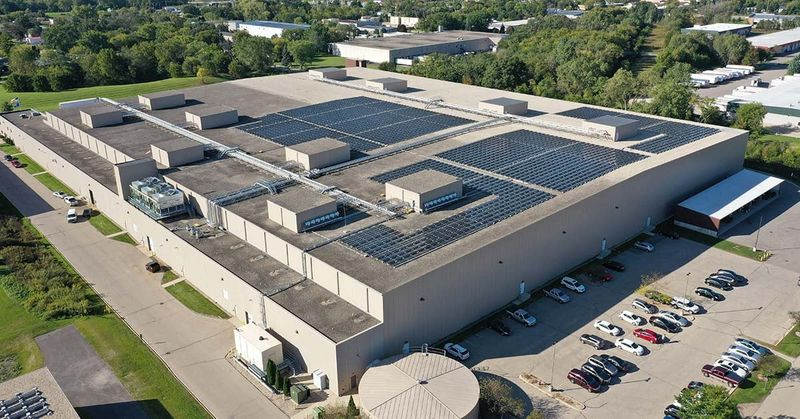
- Renewable energy like geothermal, wind, and solar
- Improving indoor air quality
Green banks and third-party financiers typically provide the capital for PACE projects. The local government typically acts as the payment collector through the property assessment, sending payments to the private finance provider. Utility cost savings or revenue from renewable energy may help the owner cover the cost of the assessment, and a property lien secures the investment in the event of a foreclosure.
Like other assessments collected as property tax, in the event of foreclosure, any past-due payments related to the PACE lien take priority over the mortgage and other loans. States and local governments develop the legal, regulatory, and procedural framework for PACE, working with specialty program administrators and finance providers to implement PACE programs, with utilities helping to advertise this financing method to their customers.
Pennsylvania allows counties to elect to participate, and a growing number of counties have opted in. In Maryland, the state mostly administers the program at the consent of the counties, with several counties running their own program and others opting out.
Watch: How the C-PACE Program Reduces Financial Burden on Investors
Why Participate?
One of the main benefits of PACE for property owners is that it can cover 100% of the upfront cost of an energy or resilience upgrade. Investments are repaid over the useful life of the installed equipment, and the longer payback period, paired with lower annual or semi-annual payments, can make upgrades more affordable. The assessment stays with the property in the event of a sale (assuming the buyer agrees to the transfer), so if the property sells, the buyer can assume the PACE payments and the benefits from the upgrades. If the buyer doesn’t agree to a transfer, the seller may need to pay off the outstanding PACE assessment. Because property taxes have high rates of payment, PACE financing can come with lower interest rates, longer loan terms, or a combination of both.
C-PACE programs may provide financing for multifamily residential properties, commercial properties, industrial buildings, or nonprofit properties, similar in spirit to how programs like the LERTA program or other multifamily tax credits layer onto a capital stack. Programs vary based on the governmental sponsor (statewide vs. local), financing structure, and eligible measures.
More than 30 states now have active C-PACE programs, with billions of dollars invested across thousands of commercial projects nationwide.
C-PACE financing generally shares the following key features:
- It provides upfront funding for clean energy projects for building owners, generally in the commercial, multifamily, and nonprofit sectors.
- It uses property liens to allow owners to repay the funding through their property taxes over the long term, similar to an additional tax assessment.
- It permits transferability of the assessment upon sale of the property.
How Does It Work?
C-PACE financing may be administered by several types of entities:
- State governments must adopt enabling legislation permitting PACE programs within the state to authorize programs at the local level, and may also administer a statewide PACE financing program.
- Local governments must adopt legislation authorizing a local PACE program following statewide enabling legislation, and may administer their own programs, often acting as the payment collector since repayments come through property taxes.
- Third-party administrators may contract with a government to manage the program, facilitating the issuance and collection of funds.
While the mechanics vary based on state and county, most programs follow a similar framework: application, project underwriting, assessment recording, and funding disbursement tied to the completed work.
If you’re an investor looking to understand this program more fully, Pennsylvania and Maryland both maintain state-level C-PACE resources with program details and county participation.
Conclusion
Participating in modernizing your real estate investments for the future will continue to be essential to build and preserve generational wealth. Utilizing government-backed resources helps savvy investors increase their cash flow and sustain their investments.
Many investors we work with appreciate the out-of-the-box thinking we bring to help grow their income and investments. Contact us today for a strategy call on your real estate investments in Pennsylvania and Maryland.