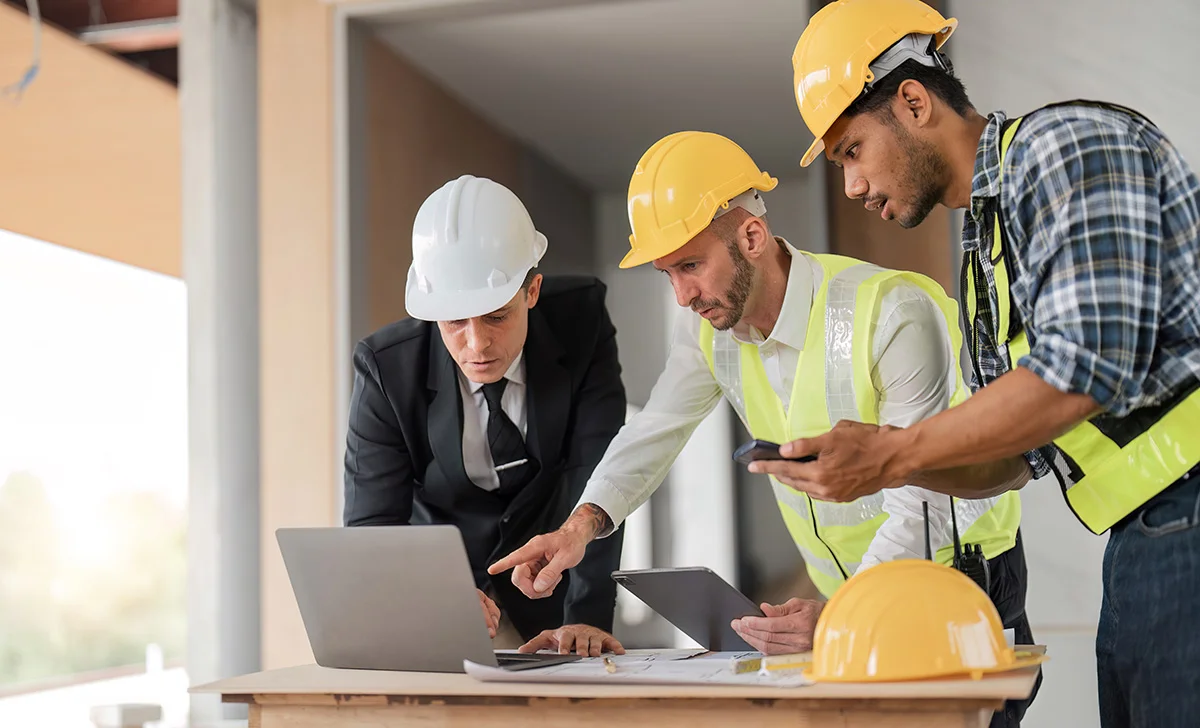
One of the guys I graduated high school with went right into the trades. He knew college was not for him, but has excelled in the trades, now owning his own contracting business and doing well.
While the previous thought process might have been that the smart kids go to college and the ‘less smart’ ones go to trade school, that’s changing with the realization that the trades are vital skilled labor with street smarts.
In today’s high construction cost market, having skilled contractors who understand the efficiencies that can be achieved in a construction project is essential.
If you are a real estate investor, you will have construction projects along the way, whether it’s the routine replacing of a roof or a ground-up new construction. Here are a few tips we’ve picked up along the way from skilled contractors to help you save money on your next construction project.
1. Thorough Planning and Detailed Budgeting
Preconstruction is critical to project success. While owners often want to get to the exciting part of seeing the project take shape, over and over we’ve heard how essential detailed planning is to controlling costs. Carefully reviewing every component in the planning stage will help identify costly overruns in the construction phase.
The risk of a cost overrun on a project is largely ‘in the dirt.’ Once out of the ground on a construction project, a large majority of that risk has passed, since much of the delay and increased cost happens during site preparation. This can be mitigated with extra planning in pre-construction, in order to identify and anticipate unknown costs.
Site preparation sets the foundation for a safe and efficient construction process. It involves clearing the land, setting up proper drainage, and ensuring the soil is suitable for building. If this step isn’t executed properly, it can lead to construction delays and increased costs downstream.
Example: An investor has some extra land on his apartment complex and decides to place mobile storage garage units for tenants. They rush the planning phase and skip soil and rock testing. When excavation begins, they discover a sinkhole, which leads to lengthy soil testing and permitting and means the excavation equipment has to be deployed to the site twice. While the sinkhole itself couldn’t be avoided, the cost of a second equipment mobilization could have been with proper pre-construction planning and testing.
2. Consider Design/Build
If you lack deep project knowledge, having a design/build team can help save you substantial design frustration. An integrated project team fosters collaboration, where contractors, architects, and engineers work toward common goals. This facilitates better communication, quicker decision-making, and a more agile response to challenges, all of which contribute to the overall cost-efficiency of a building project.
Example: An apartment project needed parking under the building. Rather than using a ramping design, which would require pre-cast concrete brought in at much higher cost, the design team used the natural slope of the street to allow for street-level entrances on both parking levels, removing the need for a ramp entirely. That meant the concrete could be poured in place, saving significant cost.
Watch: 3 Easy Ways to Reduce Construction Costs (Save Yourself $$$)
3. Bid Different Contractors in Other Locations to Get the Best Pricing
Often, in a given market, competing contractors get to know and understand their competitors’ bids, and as a result submit similar quotes. Seeking out an out-of-market contractor who is still within travel range could make sense, since their pricing may differ from local competitors. If that contractor is from a larger market, they may also be used to more competition, and thus submit a lower overall bid.
4. Risk Management and Contingency Planning
Unforeseen circumstances such as weather conditions, labor shortages, or regulatory changes can impact project costs. Establishing a contingency fund, typically 5-10% of the total budget, helps absorb unexpected expenses. Think about the time of year the project will be completed too. Is it hunting season, and should you budget for overtime because of labor shortages?
Effective monitoring and careful review can save a project from running off the rails. Encourage your subcontractors and site workers to communicate openly and share concerns early, which creates more opportunities for cost savings.
Example: A flooring contractor comes in to place flooring in a space that needs to warm up first, but notices the heat is off. Rather than laying a floor that may later expand and cause issues, they flag the need for heat, which gets addressed promptly so the floor can still be laid on schedule.
5. Efficient Labor and Workforce Management
Labor overrun is one of the biggest sources of cost increases, so watch even the small things. We repeatedly hear that increased labor cost from inefficiencies is a major part of cost overrun, and even small items can make a significant impact.
Example: A subcontractor is asked to set up their staging area at the far end of a site. The repeated back-and-forth steps, many times over, can add up to a real increase in labor cost and lost time. Watching details closely can result in greater savings.
6. Investigate Community Incentives
There are many programs available, in the form of both grants and tax incentives, generally administered by the state. If you qualify and apply, these programs can reduce your out-of-pocket costs or decrease your taxes in the form of credits or abatements.
Pennsylvania and Maryland both maintain state resources for these programs, and it’s worth checking what’s available in your market before a project breaks ground.
Conclusion
In construction projects, there are a lot of moving parts. There will always be some unexpected costs, but with planning and active oversight, they can be far less than the typical adage of ‘add 50% to your budget and that will be the real cost.’
The savvy investor pays close attention to construction costs, and that attention to detail will reflect on the bottom line, making them look like the smartest one in their graduating class, no matter their trade.
Ready to Build Smarter on Your Next Project?
Many of our investor clients appreciate the knowledgeable approach we provide to help enhance their real estate income. Contact us today to make improvements to your real estate cash flow.