Ralph was a local franchise business owner, but he also invested in real estate, spending more hours on real estate than on his business. He employed a property manager, but stayed actively involved in supervising and asset management — which qualified him as a Real Estate Professional.
Ralph was able to use the depreciation deduction on his properties to create a passive loss, which offset his business income and left his tax burden much smaller. Cost segregation studies helped increase his depreciation losses and shelter much of his income from tax.
For savvy investors seeking to optimize their tax strategies, achieving Real Estate Professional Status can be a game-changer, just as it was for Ralph.
Requirements for Real Estate Professional Status
To qualify as a Real Estate Professional, an individual must satisfy two primary criteria established by the Internal Revenue Service (IRS):
- Material Participation: The taxpayer must spend more than half of their total working hours during the tax year on real property trades or businesses. Material participation involves actively engaging in the day-to-day operations, decision-making, and management of real estate activities.
- Time Commitment: The taxpayer must dedicate more than 750 hours per tax year to real property trades or businesses. This includes activities such as property management, acquisition, development, and other real estate-related tasks.
There are eleven permitted real property trades and businesses: development, redevelopment, construction, reconstruction, acquisition, conversion, rental, operation, management, leasing, or brokerage. If you’re involved in several of these trades at once, you may be able to group the activities together.
Meeting these criteria should involve record-keeping to document the time and effort spent on various real estate activities. Keep in mind that Real Estate Professional Status essentially moves your income from “passive” to “active,” which is why the passive loss can be used to offset other income. However, if you have positive income instead of a loss, payroll taxes (Social Security and Medicare) would be due on it, since it’s now considered self-employment income by the IRS.
Watch: Easy Tax Savings for Investors: Earn Real Estate Professional Status!
Benefits of Real Estate Professional Status
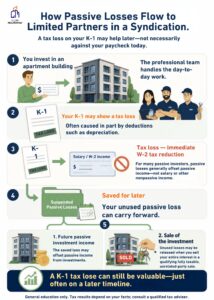
- Passive Loss Deduction: Perhaps the most significant advantage of attaining Real Estate Professional Status is the ability to deduct passive losses against non-passive income. Normally, losses from rental real estate activities are considered passive and can only offset passive income. As a qualified real estate professional, however, you can use these losses to offset other forms of income, such as wages or business income.
- Tax Optimization: Real Estate Professional Status allows investors to strategically manage their tax liabilities. By offsetting losses against other income, individuals can potentially reduce their overall tax burden, providing a valuable tool for tax planning. If you have a spouse with significant earned income, your passive losses can offset their active income as well.
Conclusion
For investors like Ralph who are deeply involved in real estate activities, the benefits of real estate extend beyond immediate financial gains to long-term tax advantages.
As with any tax-related matter, seeking the guidance of a qualified tax professional is advisable to ensure compliance with regulations and to make the most of the opportunities presented by Real Estate Professional Status.
Need more depreciation deductions? Contact us to discuss strategy and the best acquisitions for your goals.